2025 / TONY / Musical / 60 min / Book, Lyrics & Director
Synopsis
TONY begins with a simple question: Who was “Tony,” the woman behind the Tony Awards?
The musical explores the inner struggles and creative joy of a female director, and the importance of preserving one’s sense of childlike wonder amid artistic and personal hardship.
The musical explores the inner struggles and creative joy of a female director, and the importance of preserving one’s sense of childlike wonder amid artistic and personal hardship.
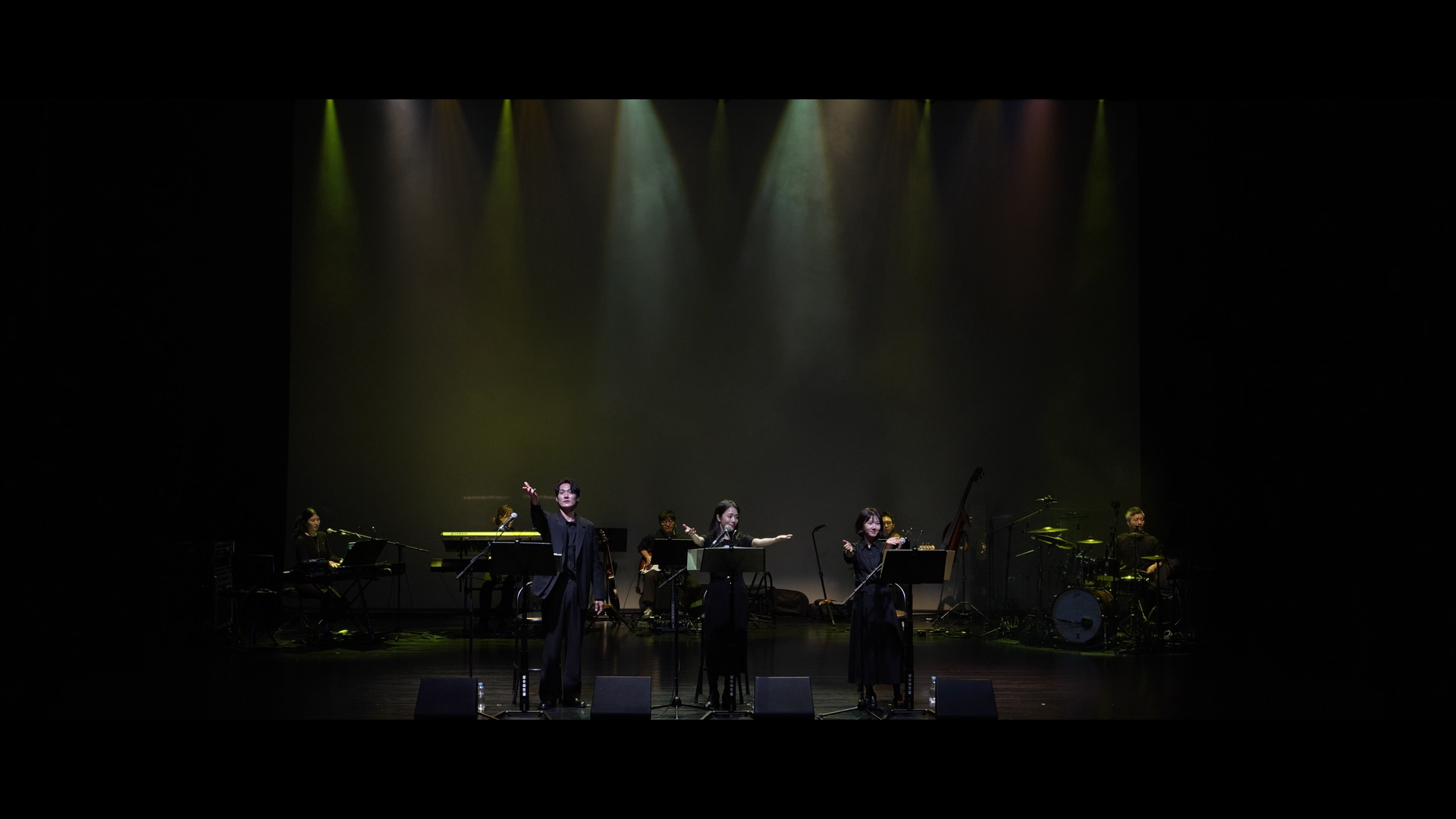
Selected for the 2025 INTO THE CREATION program by the Korea Creative Content Agency, TONY was presented as a showcase reading and is currently in development for future productions.
Through Tony’s journey, the piece reflects on the cost of creation, the weight of responsibility, and the necessity of imagination as a sustaining force in both art and life.
Director’s Note
This production approached the format of a staged reading not as a limitation, but as an opportunity. Since the protagonist herself is a director, I chose to avoid realism and instead leaned heavily into theatrical language to externalize Tony’s inner world.
The first strategy was to intentionally disrupt conventional theatrical expectations. For instance, when a performer entered the stage, instead of receiving a standard top light, the lighting was deliberately misaligned—missing the actor’s position—to create a sense of unease and displacement.
The second approach involved treating even basic reading elements—such as microphones and mic stands—as active stage props. In a moment where Tony collapses in her home due to trauma, a scripted action involving a light switch was translated into the Girl tapping a microphone, allowing the two actions to overlap symbolically within the reading format.
The third concept was “Tony’s prison.” As Tony’s anxiety and pressure gradually manifest as trauma, I initially considered constructing a literal prison onstage. Instead, I chose to illuminate the audience, allowing their collective gaze to function as prison bars—transforming spectatorship itself into a physical and psychological constraint.
Through these choices, the production sought to expand the expressive potential of the reading format while exploring how creative pressure, memory, and imagination collide within an artist’s mind.